E-Waste Disposal in Karachi — Legal Requirements & Best Practices
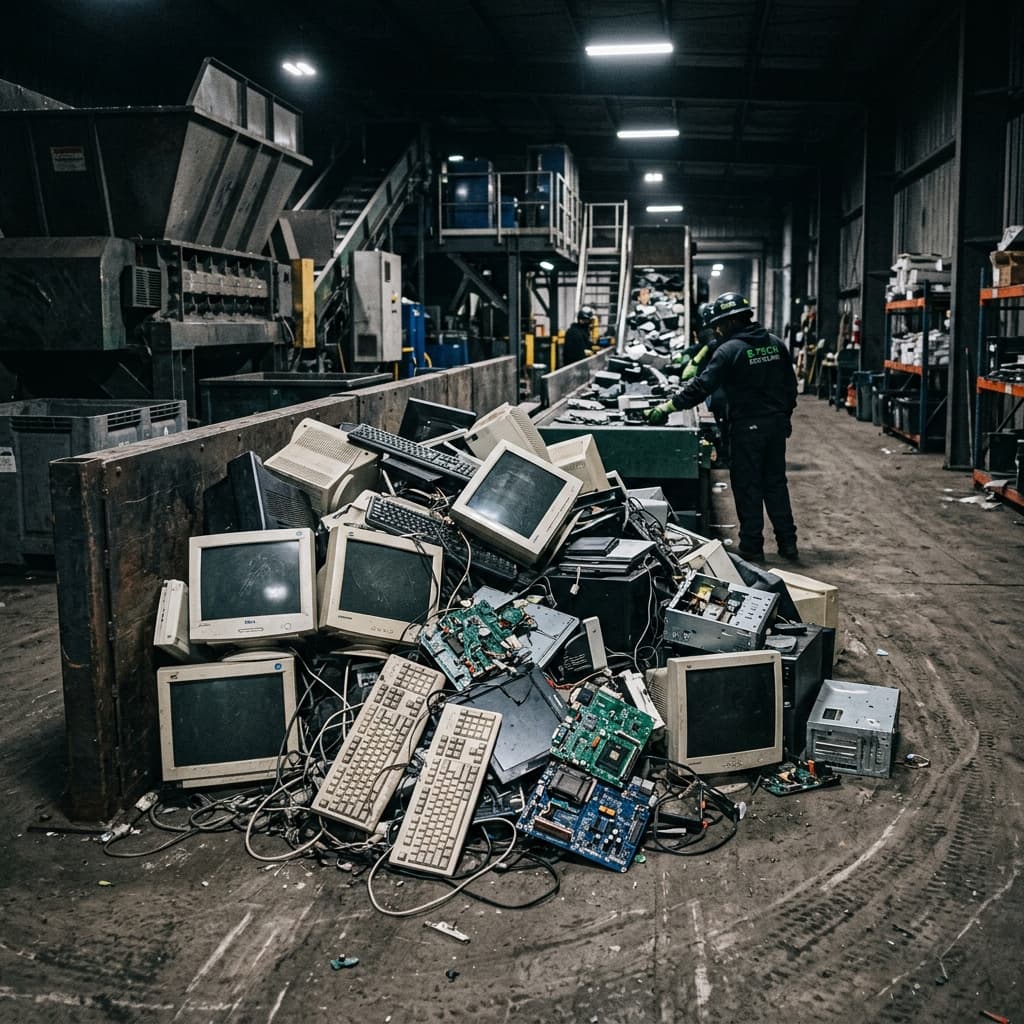
What Qualifies as E-Waste in Pakistan?
E-waste (electronic waste) includes any discarded electrical or electronic equipment. In Pakistan's business context, this commonly includes:
- IT equipment — computers, laptops, servers, monitors, printers
- Telecom equipment — phones, routers, switches, cabling
- Office equipment — photocopiers, UPS systems, scanners
- Medical equipment — diagnostic devices, monitors, imaging equipment
- HVAC equipment — air conditioners, chillers with refrigerants
- Batteries — UPS batteries, lead-acid batteries, lithium batteries
The critical point: e-waste contains both valuable materials (copper, gold, platinum) and hazardous substances (lead, mercury, cadmium). This is why proper disposal matters.
Legal Disposal Requirements
While Pakistan's e-waste regulations are still developing, businesses — especially hospitals, corporate offices, and multinational companies — are increasingly required to demonstrate responsible disposal:
- Data destruction documentation — proof that storage devices were securely wiped or physically destroyed
- Disposal certificates — official documentation from the disposal partner
- Chain of custody records — tracking who handled what, when
- Environmental compliance proof — especially important for ISO-certified companies
Documents Needed for Compliance
Have scrap to sell? Get a free pickup assessment from Krusco.
Book a Pickup →For a compliant e-waste disposal, your business should collect:
- Asset register showing items being disposed
- Internal authorization for disposal
- Data destruction certificate (for IT equipment)
- Weighment slips from the disposal partner
- E-waste disposal certificate
- GST invoice for the transaction
Risks of Improper E-Waste Disposal
Selling e-waste to informal recyclers (street kabadwalas) carries serious risks:
- Data breaches — hard drives and phones may contain sensitive data
- Environmental contamination — acid baths and open burning release toxic chemicals
- Audit failures — no documentation trail for compliance teams
- Legal liability — your company can be held responsible for improper disposal
How Hospitals and Offices Handle It
Hospitals face unique challenges — medical equipment contains sensitive patient data and potentially hazardous components. Similarly, corporate offices must ensure data security when disposing of IT equipment.
The solution is working with a verified disposal partner who understands both the data security and environmental aspects of e-waste handling.
Krusco's Certified E-Waste Process
At Krusco's e-waste division, we follow a structured process:
- Secure collection from your premises
- Data destruction (physical or digital, as requested)
- Segregation of PCBs, metals, plastics, and hazardous materials
- Responsible processing of each component
- Complete documentation package: disposal certificate, weighment slips, GST invoice
We serve Karachi's largest hospitals, corporate offices, and IT companies — with the documentation your compliance team demands.
Ready to sell your scrap?
Related Articles
How Hotels Should Handle Scrap & Asset Disposal
How hotels and hospitality businesses in Pakistan should manage scrap disposal. ACs, kitchen equipment, furniture and e-waste handling guide.
Industrial Scrap Management for Factories — A Practical Guide
How manufacturing factories in Pakistan should manage industrial scrap. Scheduling, compliance, documentation and choosing the right scrap partner.
How Scrap Recycling Helps Pakistan's Environment
How industrial scrap recycling reduces environmental impact in Pakistan. CO2 savings, metal recovery, and responsible disposal practices.